Over the last year or so, we've gradually been rebuilding our marketing stack here at Knock. While some categories have stayed the same, at least half of our vendors have changed. AI has changed the way marketing teams approach work, so new and existing vendors have adapted to best serve new needs.
In 2026, a bigger stack is not necessarily a better stack. In many cases, the opposite. What matters is how your tools work together and help your team get the work that matters done faster.
This post is our working list: one pick per function, the tools we actually run, and how we connect them. The list spans analytics, messaging, automation, SEO, content, and creative.
The top 15 AI-native marketing tools
Here's our top pick across fifteen marketing functions:
| Marketing function | Winner |
|---|---|
| General AI |  Claude Claude |
| Website |  Cursor Cursor |
| CRM |  Attio Attio |
| Data activation |  Hightouch Hightouch |
| Product analytics |  PostHog PostHog |
| Business analytics |  Omni Omni |
| Lifecycle + customer engagement |  Knock Knock |
| GTM enrichment + automation |  Clay Clay |
| Outbound |  Unify Unify |
| AEO |  Profound Profound |
| Content production |  AirOps AirOps |
| Creative production |  Paper Paper |
| Asset production |  Gamma Gamma |
| Social listening |  Octolens Octolens |
| Meeting notes |  Granola Granola |
Winners by marketing function
General AI: Claude
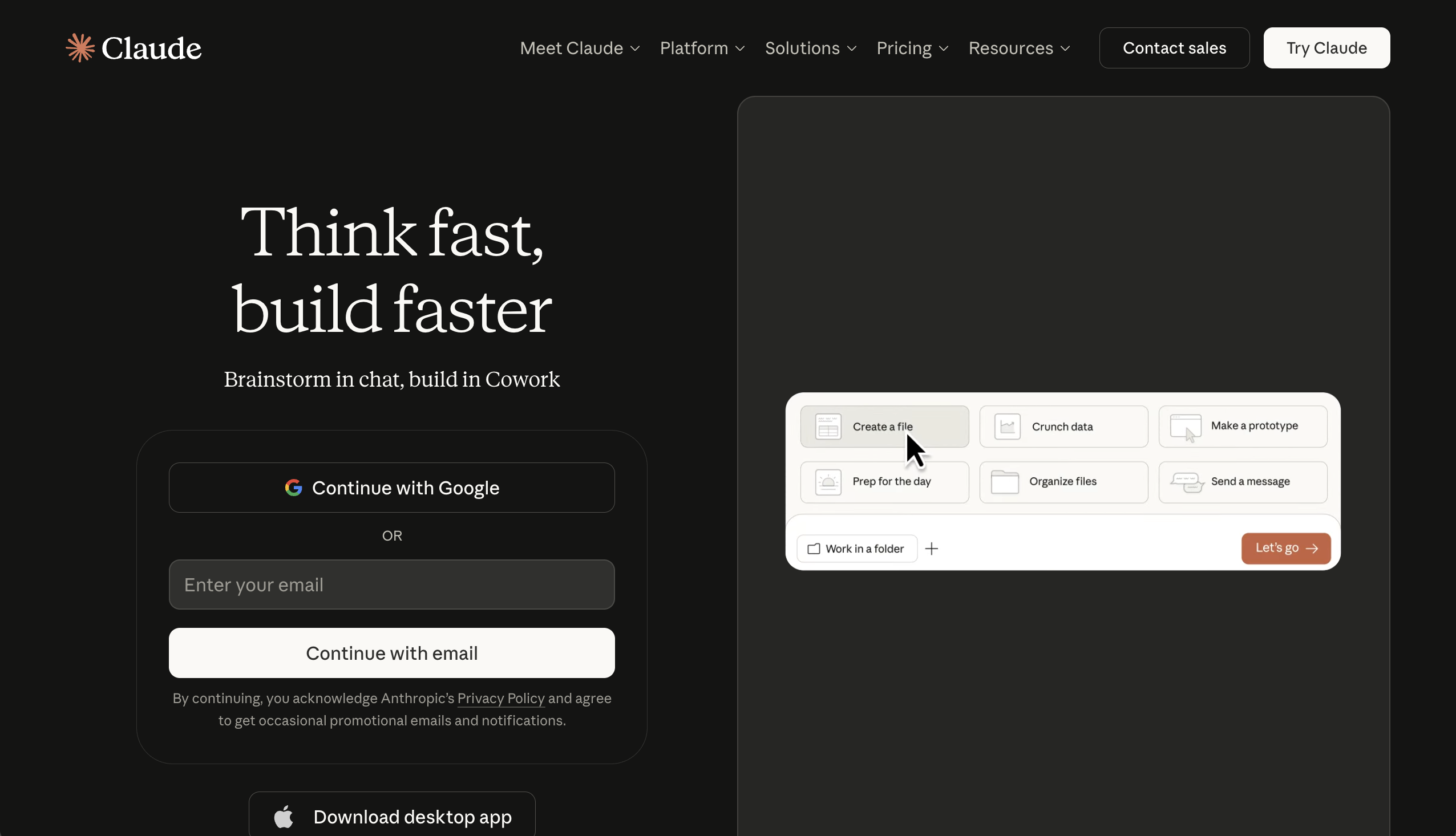
Claude is Anthropic's flagship AI model and the general-purpose tool most marketing teams reach for first. It handles research, drafting, editing, summarizing, and ideation well across formats—from ad copy to strategic memos to full blog posts.
Where Claude stands out relative to other general AI tools is instruction-following and nuance. It's particularly useful for tasks that require reasoning through tradeoffs and producing structured outputs. For marketing teams that do a lot of cross-functional writing, Claude's Projects feature enables persistent context across conversations—meaning your brand guidelines, personas, and messaging frameworks stay in scope without re-pasting them every session.
It also meets teams where they work, with Chat, Cowork, and Code for different use cases: Chat for quick research and drafting, Cowork for collaborating with the model on longer documents and projects, and Code for building and automating.
Website: Cursor
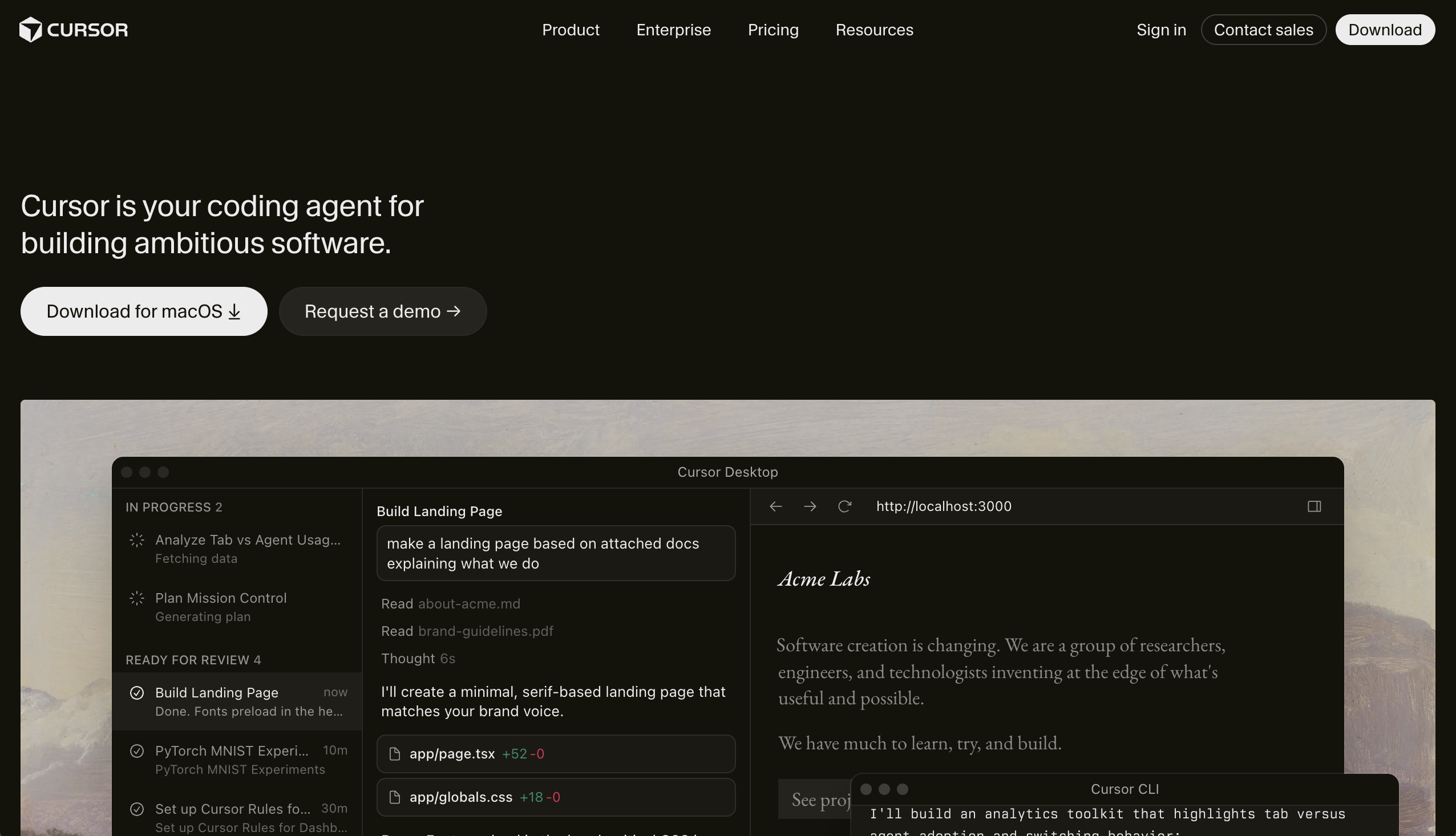
Cursor is an AI-native code editor that has become the default tool for teams building and iterating on their marketing site without a full engineering team. It's built on VS Code and uses AI to generate, explain, and edit code from natural language—meaning a non-engineer with basic familiarity can make meaningful site changes.
For marketing teams, Cursor is most valuable for landing page creation, A/B test variants, and integrating analytics or tracking scripts. Skills save reusable instructions so the agent follows your conventions on every task, and Automations run recurring work on a schedule. The ability to describe what you want in plain language and get working code back eliminates many of the tickets that would otherwise wait in an engineering queue.
CRM: Attio
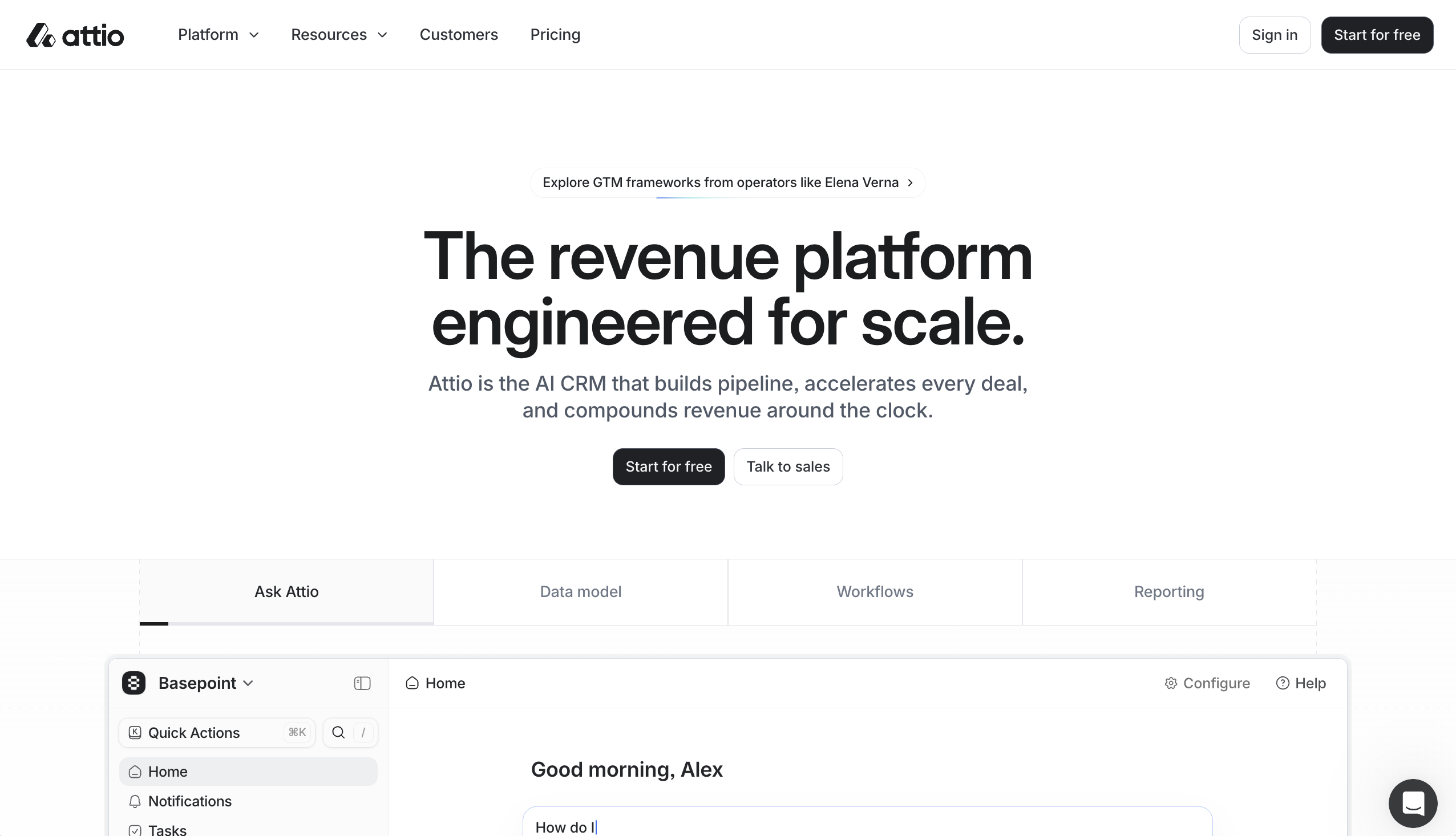
Attio is a CRM built for the way modern go-to-market teams actually work. It's data-model-first—meaning you define your own objects, relationships, and views rather than conforming to a rigid schema built for a different era of sales. It syncs directly with Gmail and calendar, surfaces AI-generated insights on contacts and companies, and integrates cleanly with tools like Clay and Hightouch.
For teams that have outgrown spreadsheets but find Salesforce or HubSpot overly complex for their stage, Attio hits a useful middle ground. It's fast to set up, easy to customize, and built for the kind of product-led or outbound-assisted motions that define most B2B SaaS go-to-market strategies in 2026.
Data activation: Hightouch
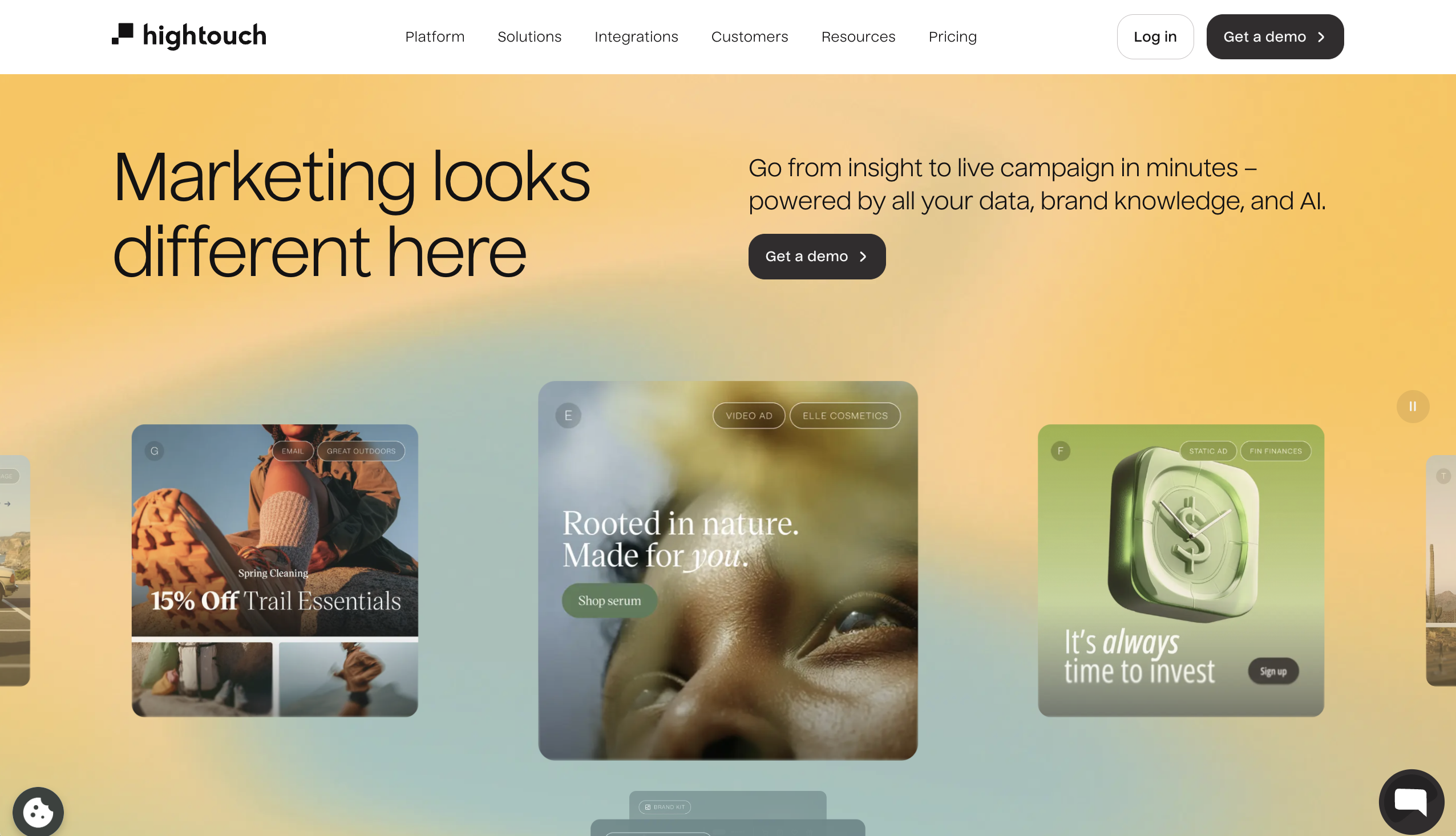
Hightouch pioneered the category of reverse ETL—syncing data from your warehouse into the downstream tools your teams actually use, including your CRM, ad platforms, email tools, and customer engagement platforms. In 2026, it's become the connective tissue of the modern marketing stack.
Where Hightouch earns its place is in closing the loop between product data and marketing action. If a user hits a usage threshold, converts from free to paid, or goes dormant, Hightouch can route that event to the right downstream system—without engineering involvement after the initial setup. Paired with Knock for lifecycle messaging or Clay for outbound enrichment, Hightouch enables marketing workflows that respond to actual product behavior rather than static list segments.
Product analytics: PostHog
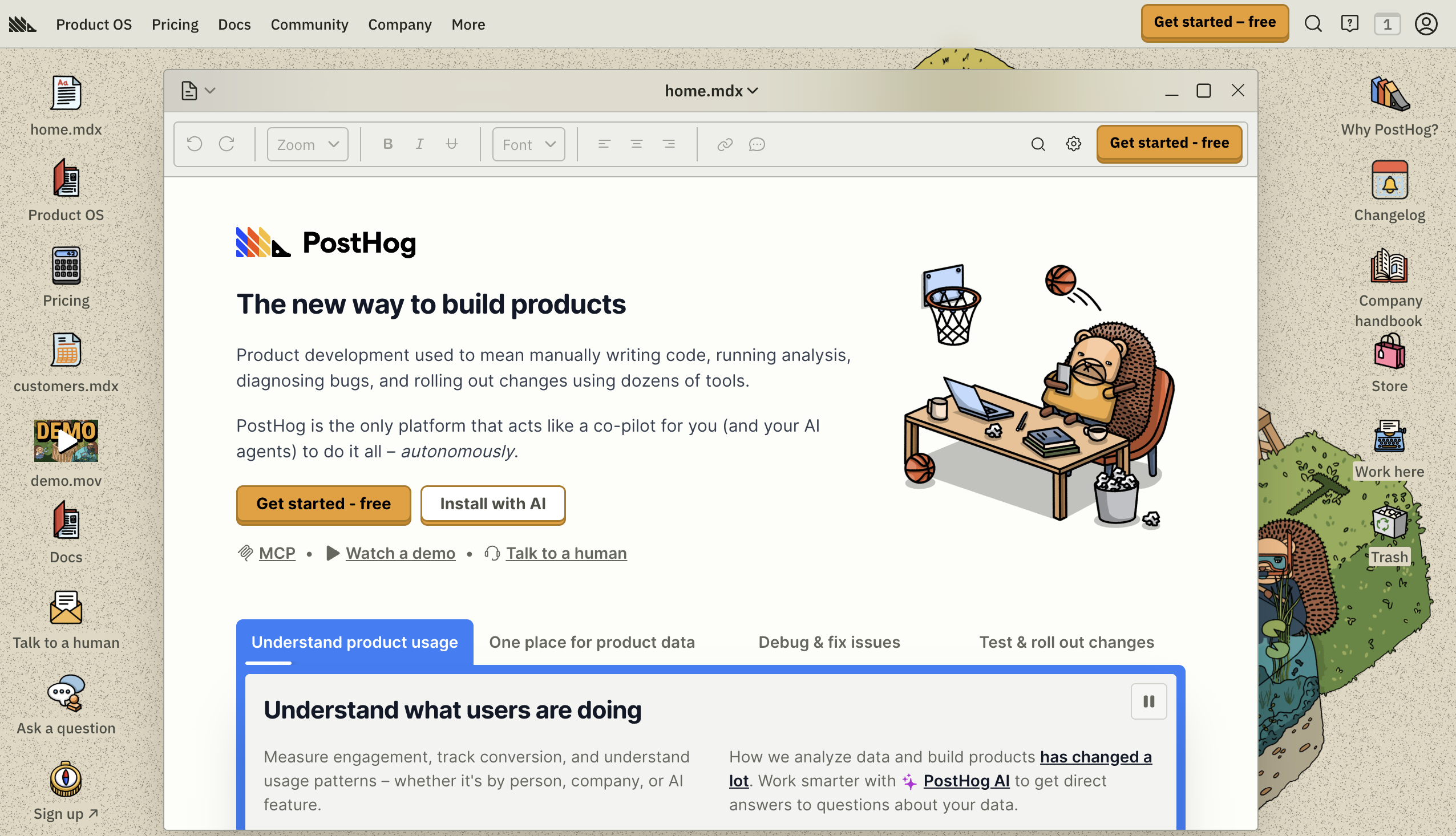
PostHog is an open-source product analytics platform that combines event tracking, session replay, feature flags, A/B testing, and surveys in a single tool. It's self-hostable, developer-friendly, and significantly more affordable than legacy alternatives at scale.
For marketing teams embedded in product-led growth motions, PostHog provides the instrumentation layer that makes lifecycle and activation campaigns possible. Understanding where users drop off, which features drive retention, and how different cohorts behave gives marketing teams the signal they need to prioritize messages and experiments. It integrates well with Hightouch and Knock for turning those insights into action.
Business analytics: Omni
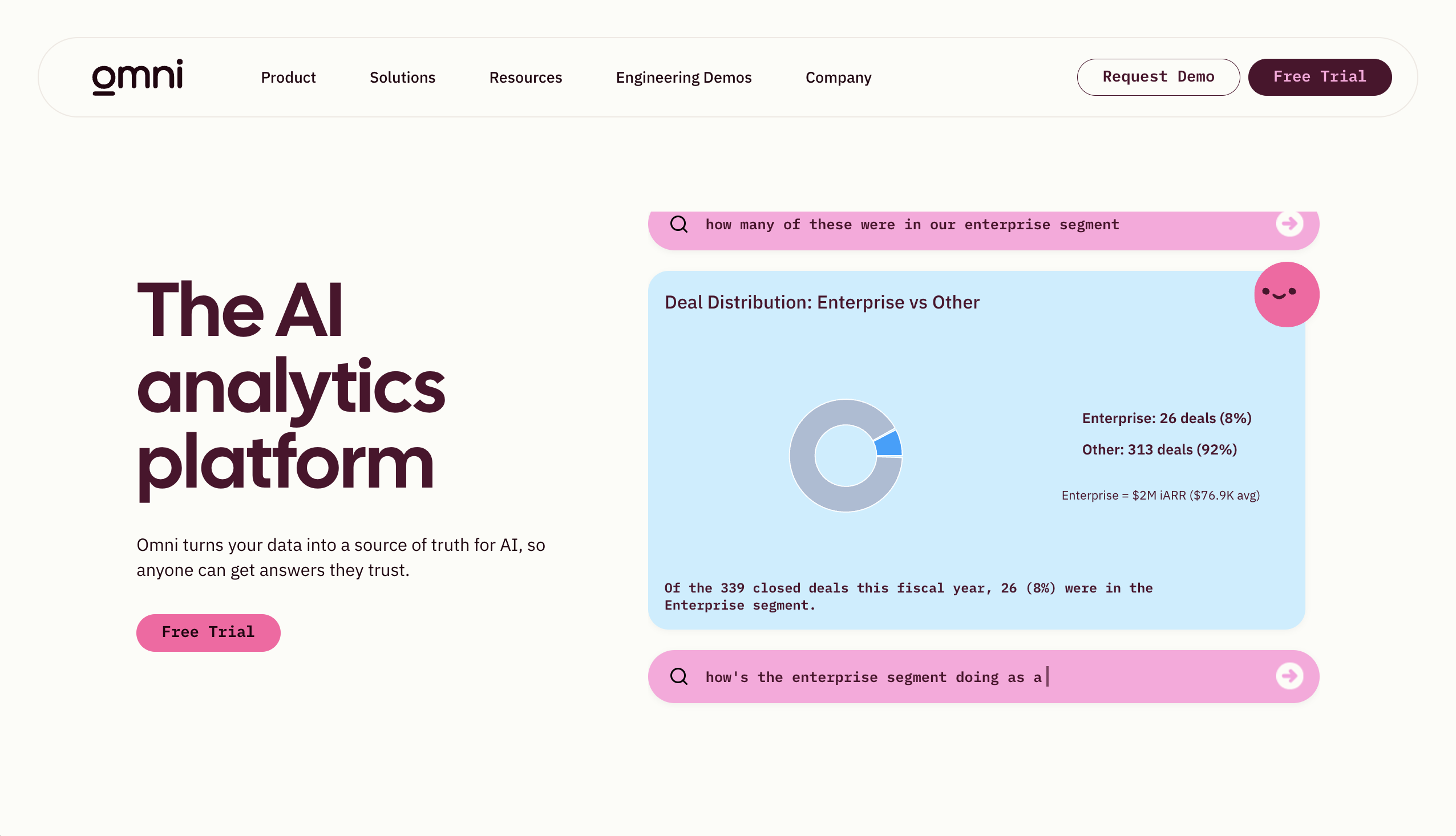
Omni is a business intelligence platform designed to make data accessible to non-technical teams without sacrificing the rigor that data teams require. It connects to your warehouse and exposes a semantic layer that business users can query in plain language or through a spreadsheet-like interface.
For marketing teams, Omni replaces the pattern of waiting on a data analyst to pull numbers for a campaign recap or board update. Teams can explore revenue attribution, pipeline contribution, and channel performance directly—and share live, embedded reports with stakeholders. It pairs well with PostHog for product data and Hightouch for activating the outputs.
Lifecycle + customer engagement: Knock
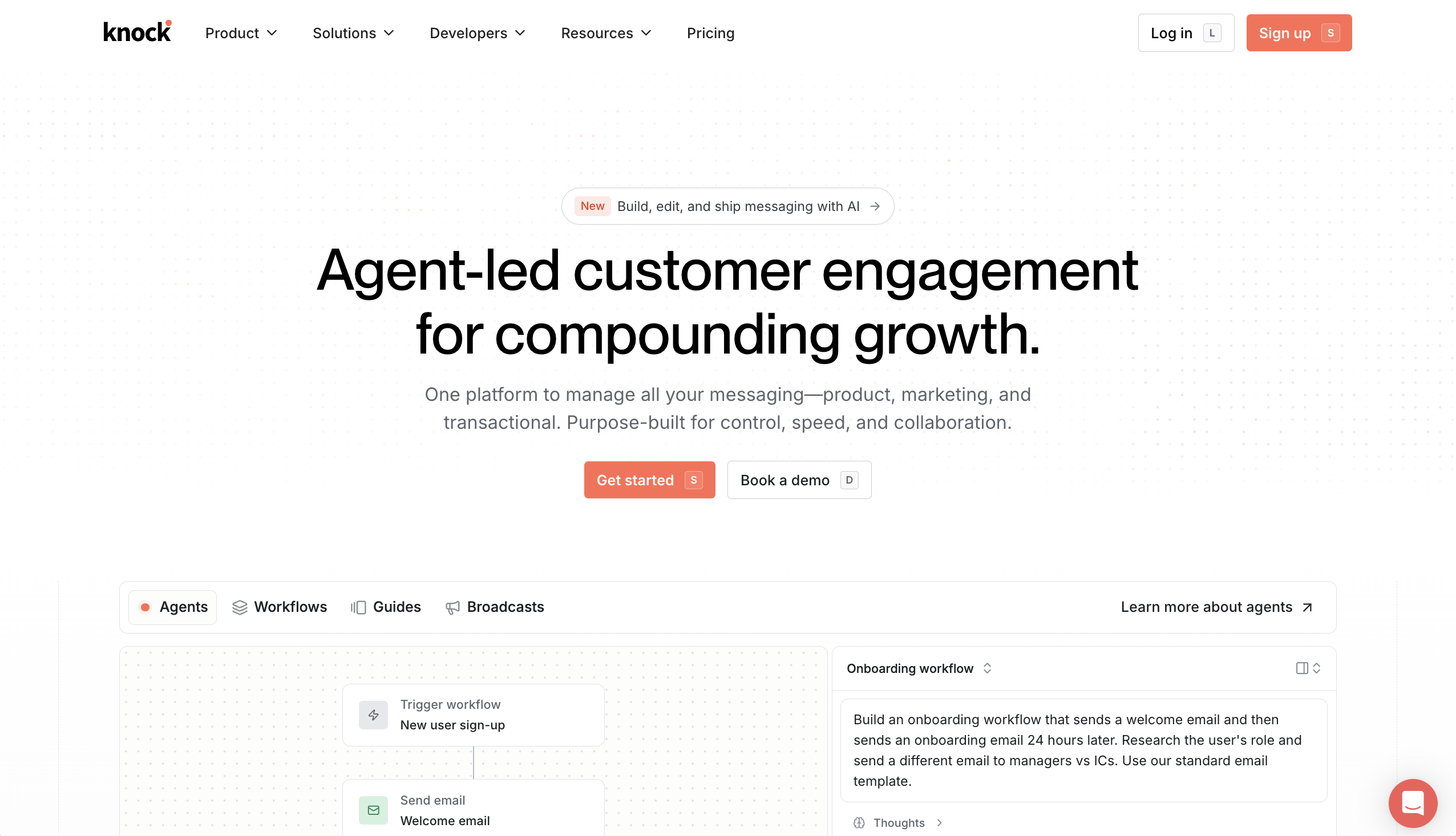
Knock is the agent-led customer engagement platform for teams to manage all their messaging at scale, from transactional and product messaging to marketing and lifecycle messaging. It provides a unified API to send messaging across email, SMS, push, chat, and in-app, using any provider you like.
The Knock platform is purpose-built to maximize control, speed, and collaboration across teams. Growth, marketing, product, and engineering teams can all use the platform to manage on-brand messaging how they want. It has a built-in agent, a visual workflow builder, user preference management, real-time analytics, and more.
Lifecycle and customer engagement has traditionally been dominated by legacy platforms like Braze, Iterable, and Customer.io. What sets Knock apart is its developer-first approach. Rather than asking engineering teams to work around the limitations of a marketer-facing tool, Knock is designed to be integrated directly into your product's event model. Workflows are triggered by product events, branched on user attributes, and governed by preference logic, all without the hacks and workarounds that plague legacy platforms.
For teams running product-led growth, the impact compounds. Webflow's growth team adopted Knock because they wanted to increase agility and say yes more often to product and marketing requests for new messaging. Nellis Auction implemented Knock and saw average weekly user visits increase from three per week to 6.5—nearly daily engagement—alongside a 60% reduction in SMS costs through intelligent batching. Amplitude's engineering team can now launch new messaging in minutes instead of days or weeks.
GTM enrichment + automation: Clay
Clay is a data enrichment and workflow automation platform built for go-to-market teams. It pulls from hundreds of data sources—LinkedIn, Apollo, Clearbit, news, job postings, and more—and uses AI to enrich, research, and score records at scale.
For marketing teams, Clay's primary use case is building highly targeted outbound lists with rich context, but its utility extends to campaign personalization, ICP scoring, and routing logic. The AI research agent—called Claygent—can execute multi-step research tasks across sources, making it possible to qualify and contextualize a list of accounts in minutes rather than hours. It connects directly to Attio, HubSpot, and Salesforce, keeping your CRM current as enrichment runs.
Outbound: Unify
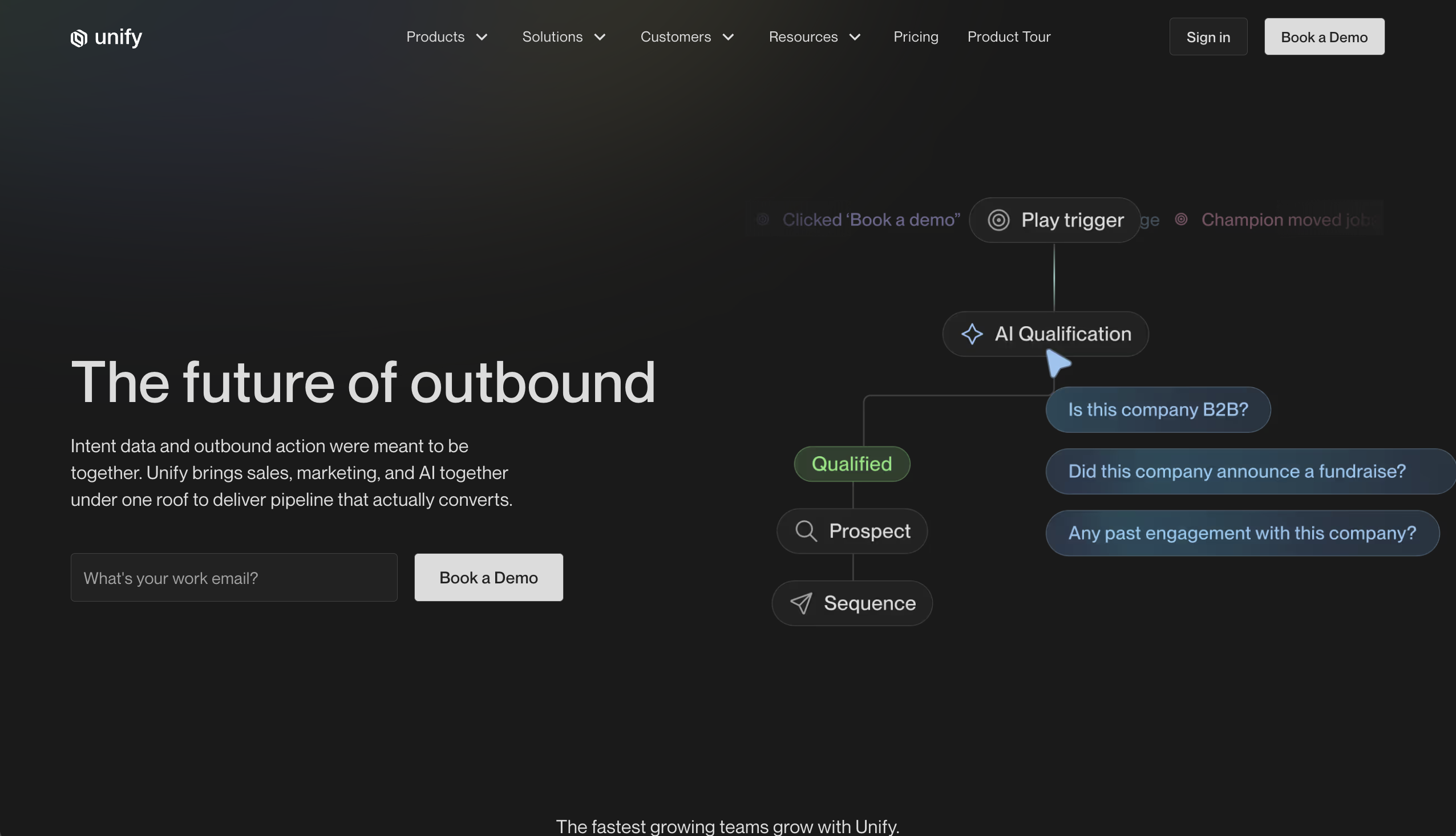
Unify is an AI-native outbound platform that identifies warm leads—companies and contacts that have shown buying intent through product activity, web visits, or content engagement—and automates personalized outreach at scale. It combines intent data, enrichment, and sequencing in a single platform.
For marketing teams that support an outbound motion, Unify reduces the gap between marketing-generated intent signals and sales action. Rather than routing raw signals to an SDR for manual follow-up, Unify can trigger personalized sequences automatically based on defined criteria. It connects to CRMs like Attio and data platforms like Hightouch for a more complete view of each account.
AEO: Profound
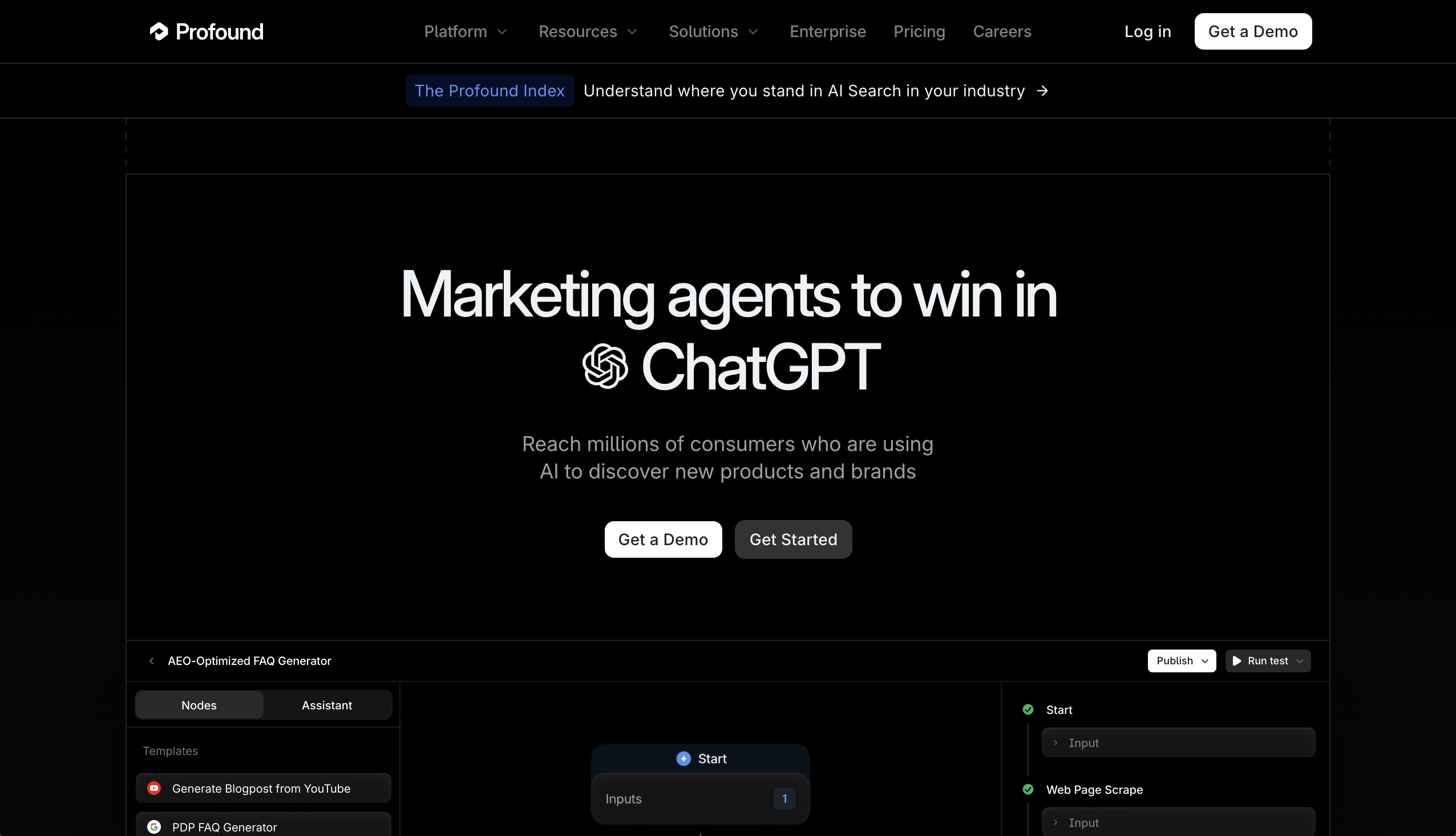
AEO—answer engine optimization—is a category that didn't exist two years ago. As more users start research sessions in AI assistants like Claude, ChatGPT, and Perplexity rather than Google, visibility in AI-generated answers has become a new distribution channel for B2B companies.
Profound is the leading tool for monitoring and improving your brand's presence in AI-generated responses. It tracks how often your brand appears in answers across major AI models, which competitors are showing up in your category, and how to improve your positioning through content and structured data. For marketing teams investing in organic acquisition, Profound adds a layer of intelligence that traditional SEO tools don't cover.
Content production: AirOps
AirOps is an AI content operations platform that helps marketing teams build repeatable, high-quality content workflows at scale. It's designed for teams that need to produce a high volume of content—SEO pages, product descriptions, blog posts, campaign copy—without sacrificing quality or brand consistency.
Where AirOps differs from a general AI writing tool is in its workflow and approval infrastructure. Teams define templates, review processes, and output standards upfront, then run them at scale. It connects to your CMS, data sources, and brand guidelines so that outputs stay on-brief. For teams with a content-heavy acquisition strategy, AirOps reduces the bottleneck between ideation and publication.
Creative production: Paper
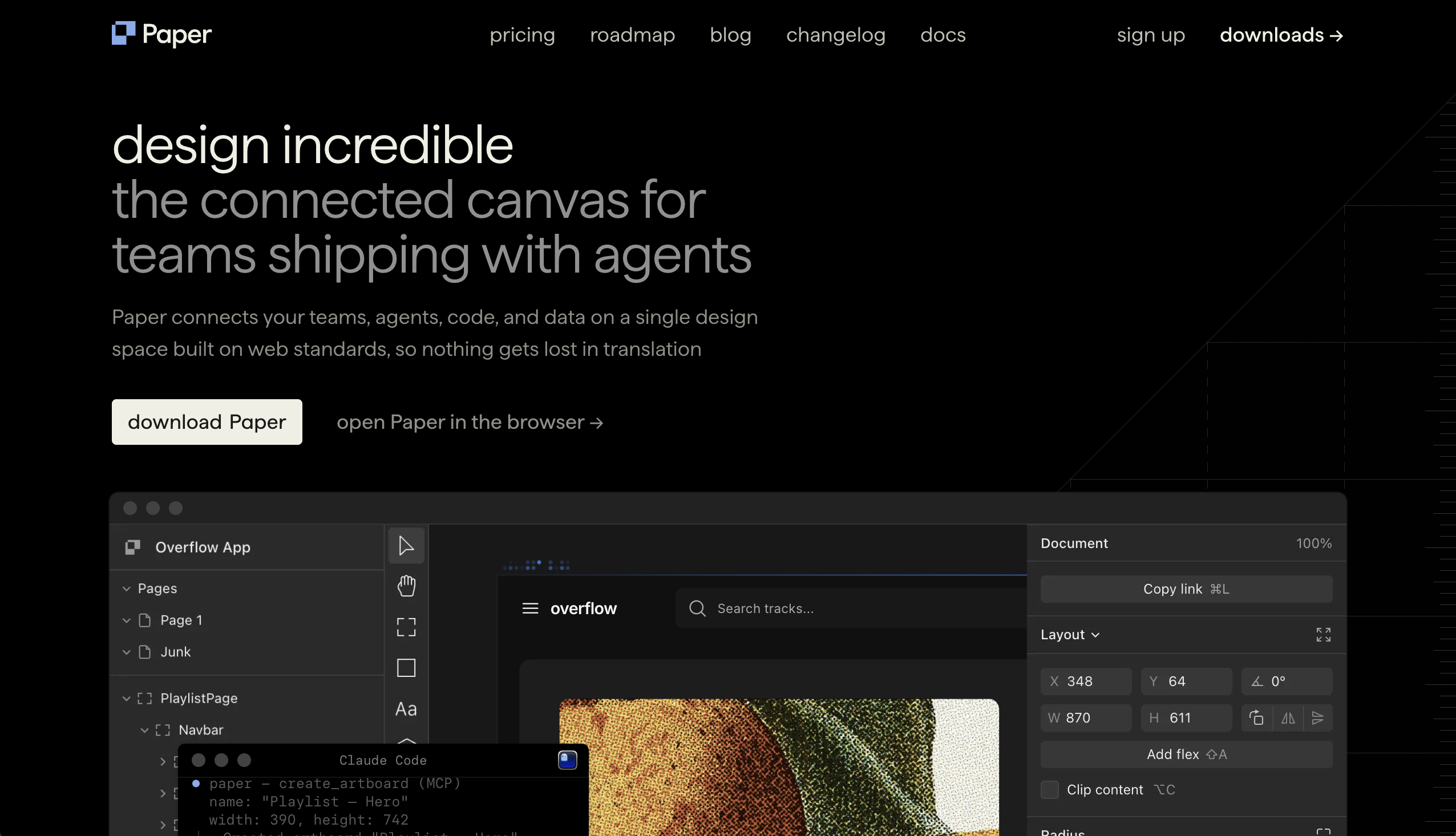
Paper is an AI-native design tool built for teams that produce a high volume of marketing creative—social ads, display banners, email headers, and similar assets. It generates on-brand variations from a base template, making it fast to produce the creative volume that paid and social campaigns require.
For lean marketing teams without a dedicated designer on retainer, Paper closes the gap between creative strategy and creative output. It works best when brand guidelines are well-defined and the use case is high-volume iteration rather than net-new concepting.
Asset production: Gamma
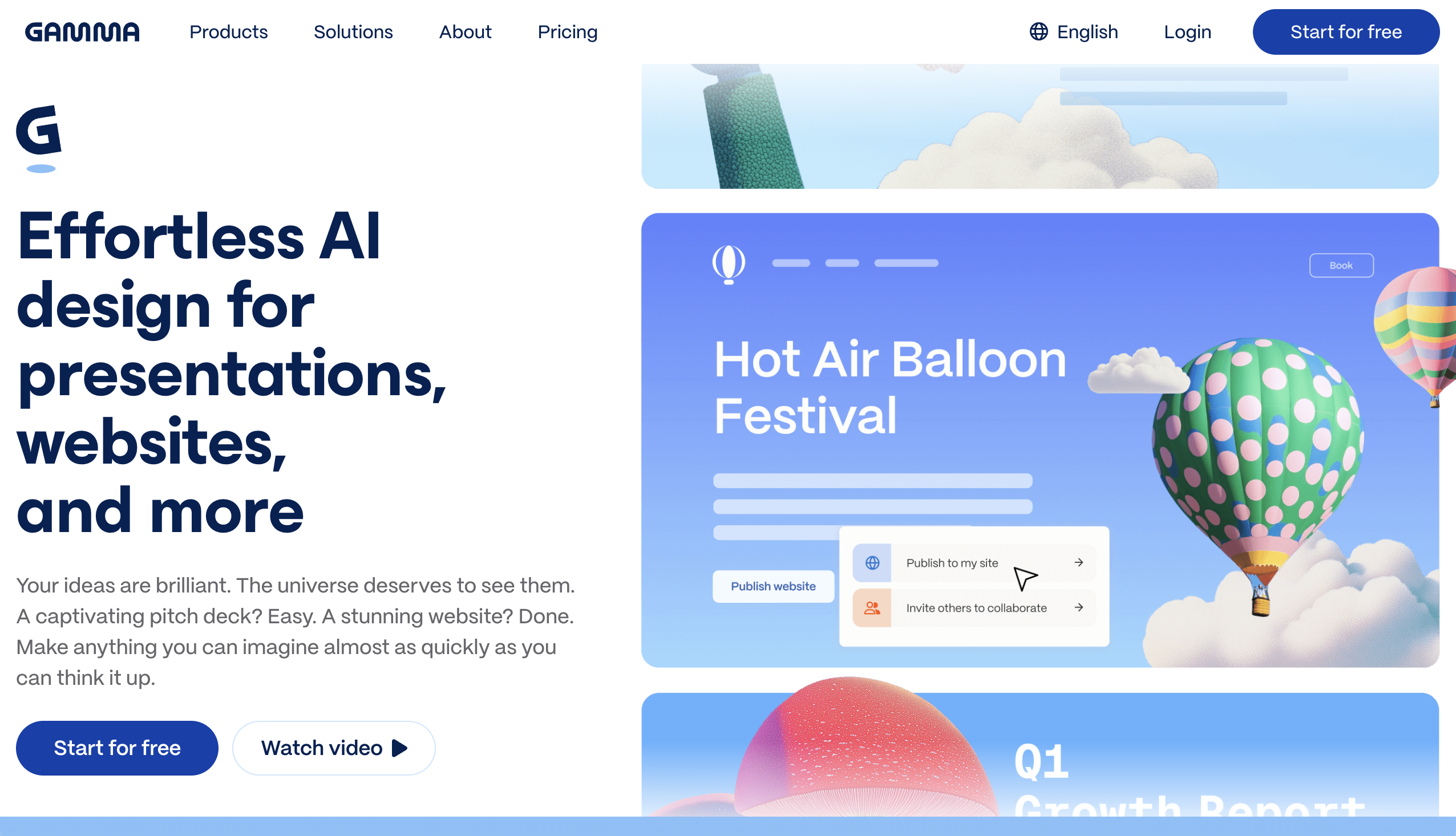
Gamma replaces Google Slides and PowerPoint for the majority of internal and external presentation use cases. It generates structured, visually polished decks from a prompt or an outline, then makes them easy to edit—without needing a designer or a template library.
For marketing teams, Gamma is most useful for sales enablement decks, investor materials, and campaign recaps. It's fast enough to turn around a first draft in minutes, and the output quality is high enough that most decks need only light editing before sharing. Gamma also handles documents and web pages with the same interface, making it a versatile alternative to Notion or Confluence for one-off collateral.
Social listening: Octolens
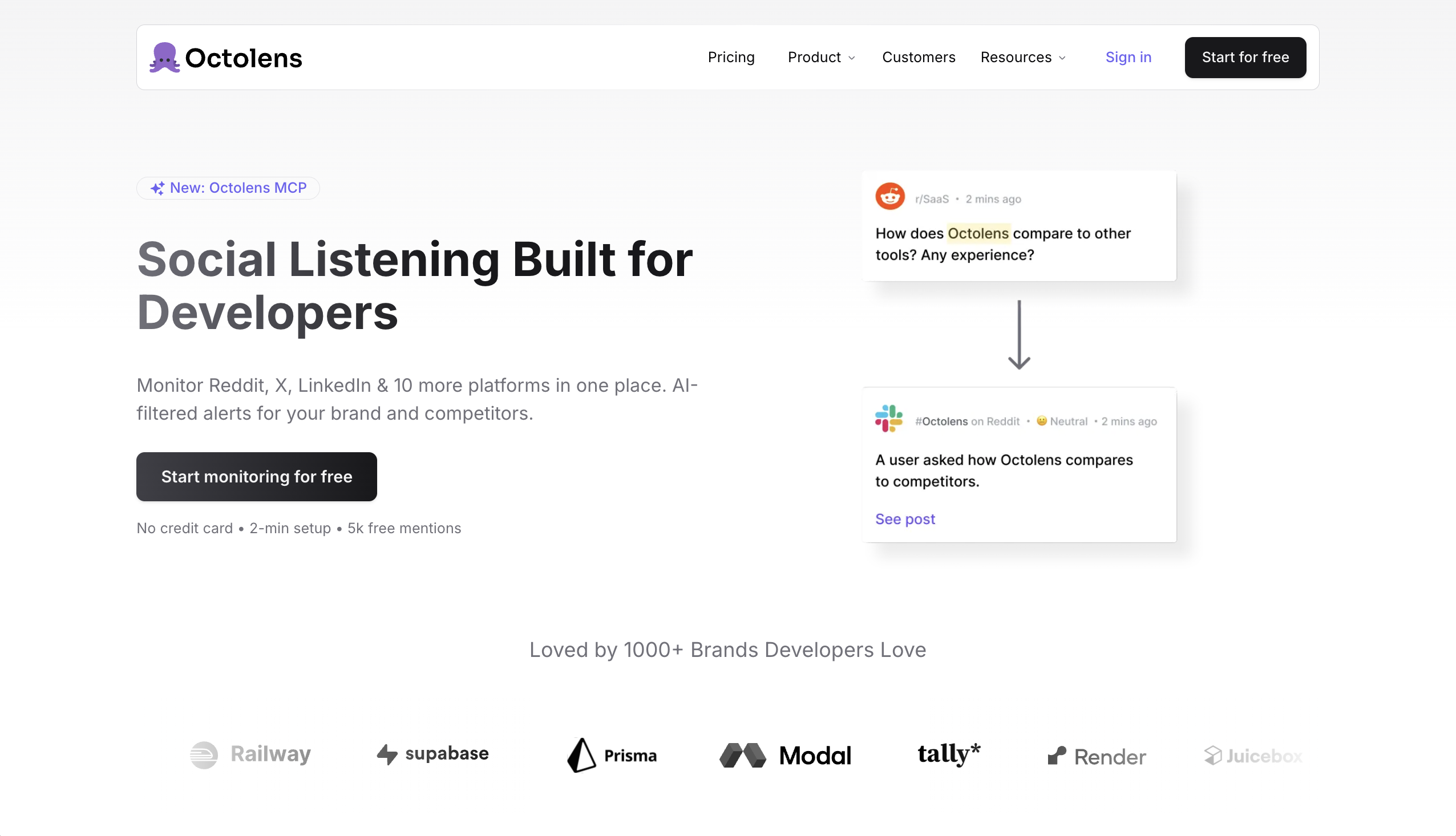
Octolens monitors social platforms, forums, review sites, and community channels for brand mentions, competitor activity, and relevant conversations. It's particularly useful for developer-focused or technical B2B companies where communities like Hacker News, Reddit, and GitHub are meaningful distribution channels.
For marketing teams, Octolens surfaces opportunities to engage—whether that's responding to a user question, joining a relevant thread, or identifying a competitor's customer who might be open to switching. It reduces the manual monitoring work that typically falls to a community manager or social media role.
Meeting notes: Granola
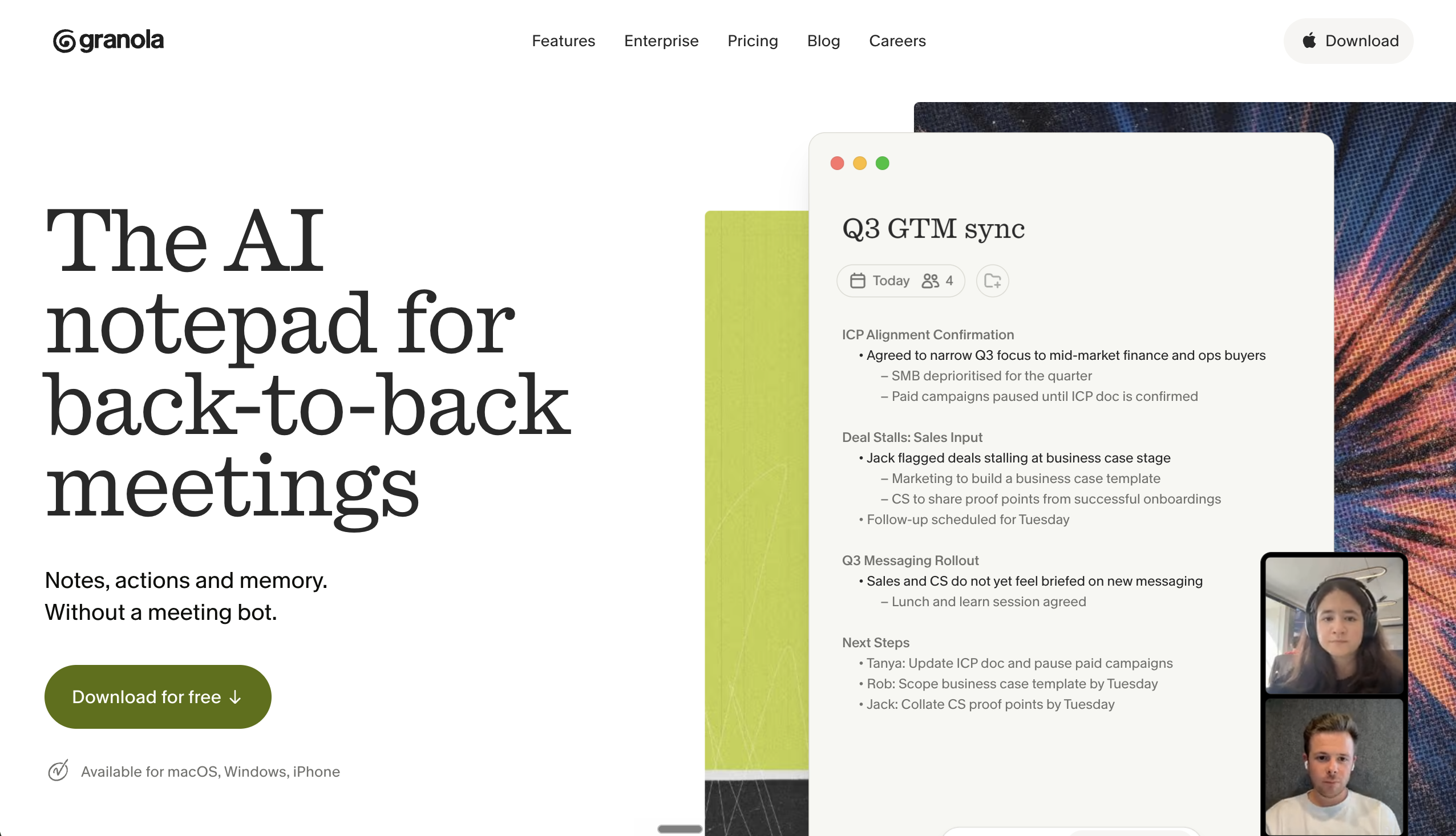
Granola is an AI notetaker built for back-to-back meeting schedules. It captures audio directly from your laptop—no meeting bot to invite—then transcribes the conversation and generates structured notes against a template you choose. The notes stay editable, link back to the transcript, and can be enhanced with a prompt after the fact, so you get a usable summary without rewatching a recording.
For marketing teams, Granola is most useful for customer interviews, sales calls, partner conversations, and internal planning sessions. It turns the qualitative signal buried in meetings—objections, feature requests, positioning language—into searchable notes you can feed into messaging, campaign briefs, and product feedback loops. Because it works across any meeting tool and keeps notes organized by folder, it becomes a lightweight research repository rather than a pile of disconnected transcripts.
How AI has changed the stack
As you can see, AI-native tooling has changed the marketing tech stack from even a year ago:
- Some category leaders have lost ground to new entrants. Tableau, once the default for business intelligence, is increasingly being displaced by AI-native tools like Omni.
- Some engrained platforms, such as Salesforce and HubSpot, remain popular for now, despite strong new entrants like Attio and Knock.
- Some categories are entirely new because of AI, most notably AEO.
There are several areas of marketing still owned by legacy platforms, such as paid advertising. Google, LinkedIn, Meta, and TikTok own the distribution networks, which can't be easily replaced. The best teams aren't looking for a tool to replace these platforms, they're using AI with them to improve how they manage the spend, creative, and targeting.
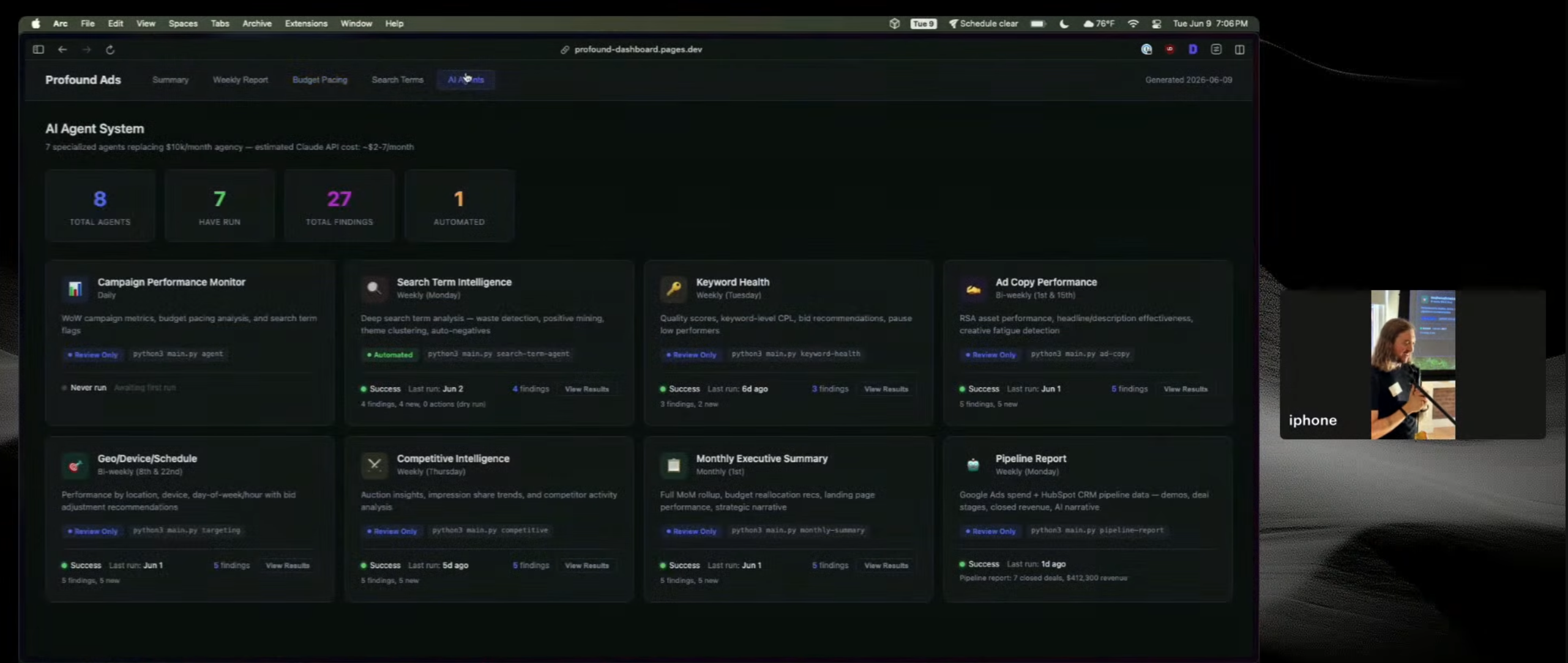
One example: at Knock's Marketing Engineer Meetup, Nick from Profound demoed a custom paid search monitoring dashboard that pulls in ad performance data across channels, surfaces anomalies, highlights budget pacing, and summarizes competitive keyword movement in one view. This would have taken weeks of engineering time to build in a BI tool, but with Claude Code, he was able to vibecode this to his exact specs in one afternoon.
There are also areas where AI-native winners haven't yet emerged. Account-based marketing, event marketing, and video production are still largely fragmented or dominated by point solutions that might have AI capabilities bolted on. Some of these functions remain more manual while waiting for purpose-built AI tools to enter the market.
Building the stack that's right for you
The tools above represent our top picks for the marketing functions Knock currently cares about, but your needs may differ. The right stack depends on your stage, motion, and team size. A 10-person startup with a PLG motion needs a different configuration than a 500-person company with an enterprise sales motion.
A few principles hold true, regardless of stage:
- Start with data. Many tools here are only as useful as the data model underlying them. Investing early in the right data, clean event tracking, and a warehouse makes downstream tools more valuable.
- Wire your stack before adding to it. Most marketing teams have more tools than integrations. Before adding a new platform, check what tools it integrates with and consider how data will flow between tools.
- Invest early in the right infrastructure. For example, if messaging is a valuable part of your product experience, a general-purpose email tool won't give you the deliverability, orchestration, preference management, observability, or in-app capabilities that dedicated infrastructure can.
Knock is agent-led engagement infrastructure that makes it easy to power onboarding flows, activity alerts, billing notifications, collaboration updates, and more. If you'd like to try it out, sign up for a free account or chat with our team.