If you're outgrowing MailChimp because you need more control, additional messaging channels, or infrastructure built for product-led growth, you're not alone.
MailChimp remains a solid choice for smaller marketing teams looking for basic email sending and CRM functionality, but many technical teams and fast-growing companies now choose specialized tools that offer more control, support cross-channel messaging, and help automate messaging workflows.
The best MailChimp alternatives at a glance
- Knock. Best for cross-functional teams needing maximum control, dependable messaging infrastructure, and visual tools for non-technical teams.
- Customer.io. Best for growth teams in need of flexible segmentation and behavioral triggers across email, SMS, and push.
- Braze. Best for enterprise organizations running high-volume marketing campaigns.
- Iterable. Best for enterprise marketing teams that prioritize experimentation.
- SendGrid. Best for developers who need reliable transactional email delivery with strong API support.
- ActiveCampaign. Best for small and mid-size businesses wanting marketing automation without heavy technical overhead.
- Klaviyo. Best for e-commerce brands that need deep data integration with Shopify and automated revenue-focused flows.
Why people look for alternatives to MailChimp
MailChimp is a marketing automation platform designed for small businesses and go-to-market teams. It does email marketing, basic automations, and audience management well. But as products scale, teams often run into structural limitations that push them toward more flexible solutions.
- Limited API flexibility. MailChimp's API is built around list-based marketing workflows. Teams that need to trigger notifications programmatically based on product events often find the API too constrained for complex, real-time use cases.
- Weak transactional messaging support. Transactional email in MailChimp requires Mandrill, a separate add-on with its own pricing and setup. Teams that need unified transactional and product messaging in one platform end up managing two systems.
- No in-app or real-time notification support. MailChimp has no native support for in-app notifications, notification feeds, or real-time delivery channels. Teams building product-native notification experiences have to look elsewhere.
- Pricing that scales poorly. MailChimp's contact-based pricing model can become expensive quickly as a user base grows, especially for teams that send at high volume or need to reach large segments infrequently.
- Limited cross-functional tooling. MailChimp is built for marketers. Engineering, product, and operations teams often lack the access, controls, and developer tooling they need to collaborate on notification logic without custom workarounds.
Why Knock is a strong MailChimp alternative
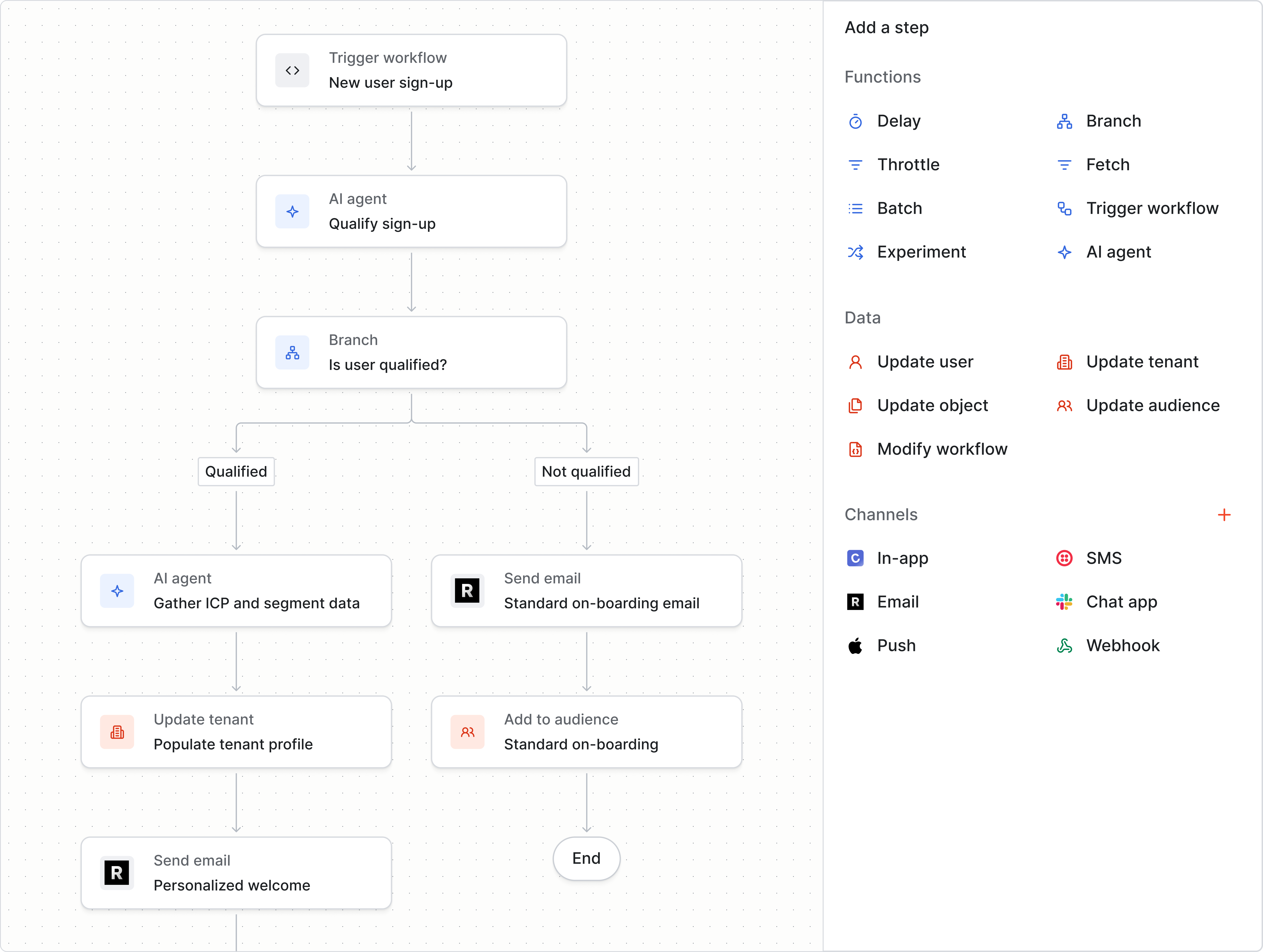
Knock is a customer engagement infrastructure platform built for teams that need more control over how, when, and where they reach users. It gives engineers a powerful API and SDKs to build notification logic, while giving product and growth teams visual, low-code tools to manage templates and workflows without writing code.
Best for
Engineering, product, growth, and operations teams at B2B SaaS companies, marketplaces, and PLG-driven products that need a single platform for transactional notifications, in-app feeds, and cross-channel messaging. Knock is a strong fit when multiple teams need to collaborate on notification logic without creating engineering bottlenecks.
Strengths
- Cross-channel orchestration. Knock supports email, SMS, push, in-app feeds, Slack, and more from a single API. Workflows route messages across channels with conditional logic, delays, and advanced functions such as batching and AI agents.
- Built for cross-functional teams. Engineers work in code. Product managers and marketers work in Knock's visual workflow builder and template editor. Both sides operate in the same system without stepping on each other’s toes.
- Programmable messaging logic. Knock's workflow engine supports conditional branching, digest batching, throttling, and per-user preference management. Teams get fine-grained control over every message sent.
- Unified data activation. Bring real-time data into Knock via your product, warehouse, CDP, and reverse ETL sources to trigger relevant, timely messaging based on user attributes, events, or segment changes.
- Enterprise-ready infrastructure. Knock is SOC 2 Type II certified, offers HIPAA-compliant infrastructure, and provides data residency options for compliance-heavy organizations. On top of that, Knock delivers hundreds of millions of messages per month, and provides the observability, audit logging, and version control that engineering and security teams require.
Limitations
- Learning curve for less technical teams. Knock's full feature set is deep. Non-technical users can manage templates and workflows without code, but getting the most out of the platform benefits from engineering involvement during initial setup.
- Priced on message volume, not contacts. Knock's pricing model is well-suited for teams with large user bases who send targeted messaging, but teams accustomed to contact-based pricing may need to model costs differently.
Pricing
Knock offers a free tier that includes 10,000 messages per month. Paid plans start at $250 per month (Starter, up to 50,000 notifications). The Enterprise plan is available for organizations with higher volume, custom compliance requirements, or SLA needs. Enterprise pricing can be based on message volume or monthly active user count, which makes costs more predictable as teams scale.
How it compares to MailChimp
MailChimp is optimized for outbound email marketing to lists. Knock is optimized for product-triggered, cross-channel notifications at scale. Where MailChimp focuses on basic email marketing, Knock covers consolidates marketing, product, and transactional messaging into one collaborative system, with developer-grade infrastructure. If your team is hitting the limits of MailChimp, struggling to build in-app notifications, or managing multiple messaging tools that don't talk to each other, Knock is worth evaluating.
Customer.io
Customer.io is a marketing automation and messaging platform built around behavioral data. It lets teams create event-triggered workflows across email, SMS, push, in-app, and Slack using a visual campaign builder and a flexible API.
Best for
Growth and marketing teams at SaaS companies that want to build behavioral lifecycle campaigns using product events. Customer.io works well when the marketing team drives most messaging strategy and needs a platform with both no-code and code-friendly options.
Strengths
- Flexible segmentation. Customer.io supports complex audience filtering based on attributes, event history, and device data, making it useful for teams running targeted lifecycle campaigns.
- Multi-channel support. Email, SMS, push, in-app messages, and Slack are available from a single platform. Teams can orchestrate across channels without stitching together separate tools.
- Data pipeline integrations. Customer.io connects to data warehouses and CDPs, making it a reasonable choice for teams with mature data infrastructure who want to drive messaging from centralized event streams.
Limitations
- Less suited for product-native notifications. Customer.io's in-app messaging and notification feed capabilities are more limited compared to platforms purpose-built for product notification infrastructure.
- Pricing scales with contact volume. Like MailChimp, Customer.io's pricing is tied to the number of people in your workspace, which can become costly for teams with large, infrequently messaged audiences.
- Engineering access requires higher tiers. Some API and integration features are locked to higher pricing tiers, which can limit developer flexibility for teams on entry-level plans.
Pricing
Customer.io pricing starts at $100 per month for up to 5,000 profiles (Essentials tier). The Premium tier with advanced features like frequency capping and A/B testing starts higher. Enterprise pricing is available for larger organizations.
How it compares to MailChimp
Customer.io gives marketing and growth teams more flexibility than MailChimp, particularly around behavioral triggers and multi-channel execution. It's a meaningful step up for teams that have outgrown MailChimp's list-based model but still want a marketer-first tool. Teams that need deep developer access or product-native notification infrastructure may find Knock a better fit.
Braze
Braze is an enterprise customer engagement platform built for high-volume, multi-channel campaign execution. It serves large marketing teams running sophisticated lifecycle programs across email, push, SMS, in-app, and web.
Best for
Enterprise marketing and growth teams at consumer and B2B companies with large user bases, complex segmentation needs, and the resources to support a full-featured platform implementation.
Strengths
- Comprehensive channel support. Braze covers email, push, SMS, in-app messages, content cards, web push, and WhatsApp in one platform with deep channel-specific customization.
- Advanced personalization. Braze's Liquid templating and connected content features enable dynamic, real-time personalization in messages at scale.
- Robust analytics. Built-in attribution, funnel analysis, and campaign reporting give marketing teams visibility into engagement without relying on external BI tools.
Limitations
- High cost and implementation overhead. Braze is one of the more expensive platforms in the category. Implementation typically requires dedicated resources, and smaller teams often find the platform more than they need.
- Marketing-centric design. Braze is built for marketing teams. Engineering teams that want programmable, API-first notification infrastructure will find it less flexible than developer-focused alternatives.
- Learning curve for less technical teams. Despite its visual tools, the platform's depth can make it challenging for smaller teams without dedicated CRM or marketing operations support.
Pricing
Braze does not publish pricing publicly. Contracts are typically annual and negotiated based on volume, channels, and features. Expect enterprise-level investment.
How it compares to MailChimp
Braze is in a different category than MailChimp in terms of capability and cost. For teams that have outgrown MailChimp and are running enterprise-scale marketing programs, Braze is a serious option. For teams that want more engineering control and cross-functional tooling without the enterprise overhead, Knock offers a more developer-native path.
Iterable
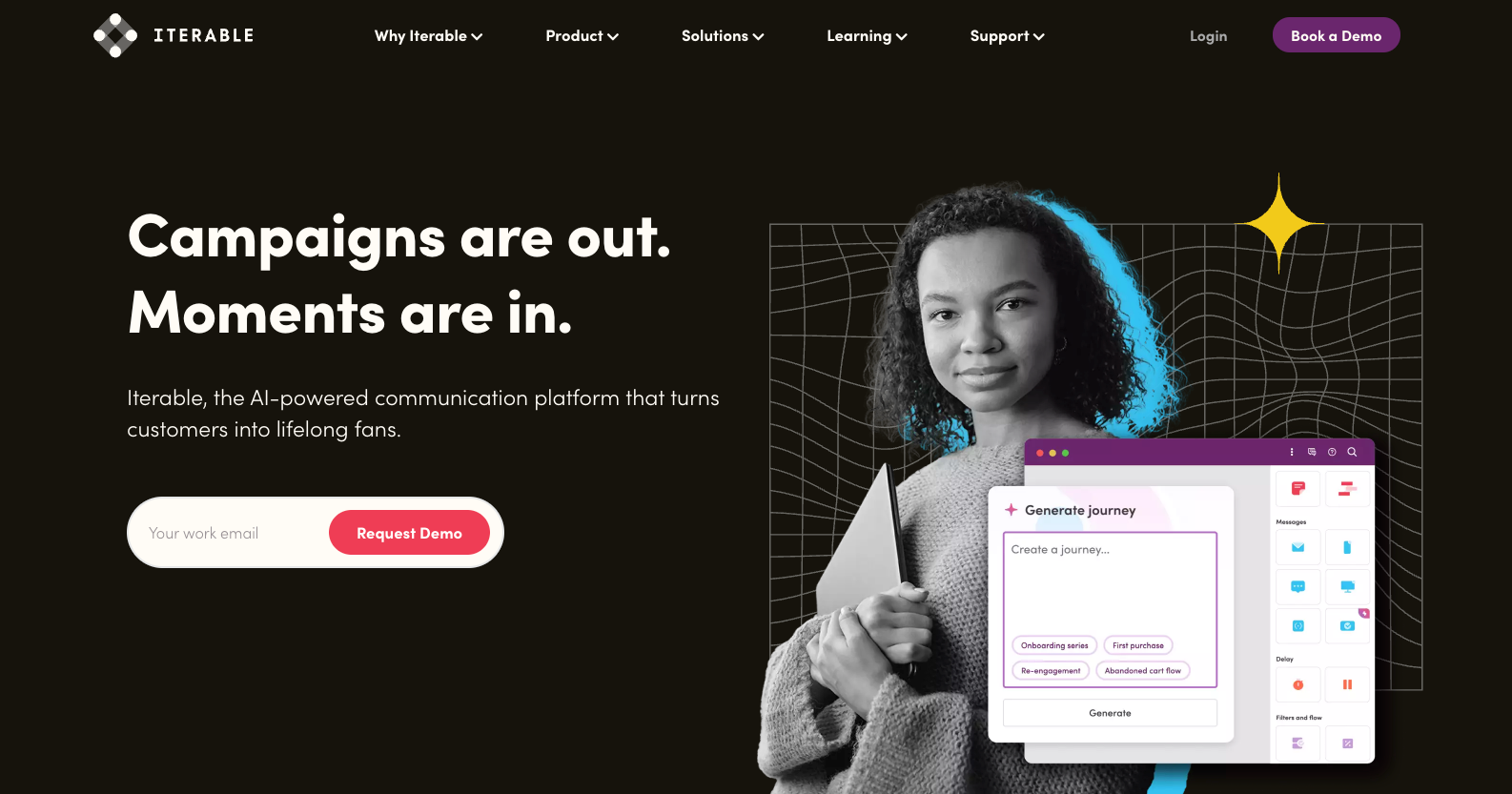
Iterable is a multi-channel marketing platform focused on lifecycle and growth marketing. It offers visual workflow building, audience segmentation, and cross-channel delivery across email, SMS, push, and in-app.
Best for
Mid-market and enterprise marketing teams that need to run complex, data-driven lifecycle campaigns and want flexibility in how they segment and target users across channels.
Strengths
- Visual campaign builder. Iterable's drag-and-drop workflow editor makes it accessible for non-technical marketers to build multi-step journeys without writing code.
- Data flexibility. Iterable supports custom event and user data models, giving teams control over how they define and use behavioral data in campaigns.
- A/B and multivariate testing. Built-in testing tools let teams optimize message content, timing, and channel selection without additional tooling.
Limitations
- Limited developer tooling. Iterable is built for marketing teams. Engineering teams looking for API-first infrastructure and code-level control over notification logic will find fewer options than on developer-focused platforms.
- Pricing is volume-based and opaque. Iterable does not publish pricing publicly. Teams often find costs scale quickly as contact counts and channel usage grow.
- Weaker in-app notification capabilities. Iterable's in-app messaging is less mature than its email and push functionality, which can be a limitation for product teams building notification-native experiences.
Pricing
Iterable pricing is custom and based on contact volume and features. It is not published publicly. Most teams engage in a sales conversation to receive a quote.
How it compares to MailChimp
Iterable is more capable than MailChimp for cross-channel lifecycle marketing and behavioral segmentation. Teams looking to upgrade from MailChimp for marketing-driven campaigns will find it a strong option. Teams that need product-triggered notifications with engineering-grade control will find Knock a better match.
SendGrid
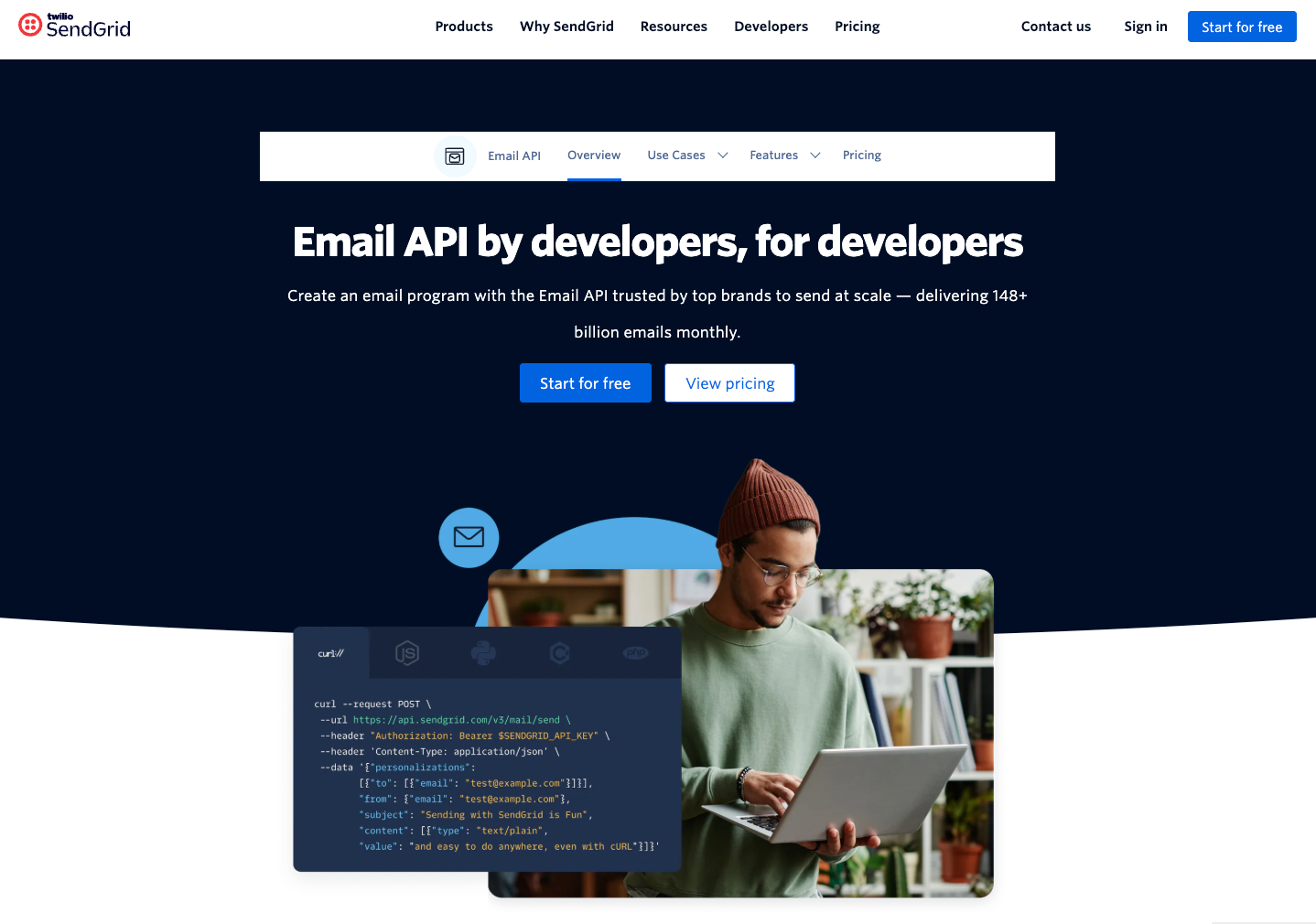
SendGrid, now part of Twilio, is an email delivery platform focused on transactional and marketing email. It provides a reliable sending infrastructure, REST API, and an email marketing tool alongside its core delivery service.
Best for
Development teams that need dependable transactional email delivery with a straightforward API, or smaller teams looking for an email marketing tool with a deliverability-first foundation.
Strengths
- Strong deliverability. SendGrid has built its reputation on email deliverability. It provides IP warmup support, dedicated IPs, and deep analytics on bounce rates and spam reports.
- Developer-friendly API. SendGrid's REST API is well-documented and widely used. Most engineering teams can get up and running with transactional email quickly.
- Generous free tier. The free plan covers up to 100 emails per day, which gives small teams and early-stage products a low-cost starting point.
Limitations
- Email only. SendGrid does not support push, SMS (outside of Twilio's broader ecosystem), in-app notifications, or multi-channel orchestration. Teams needing more than email will need additional tools.
- Marketing features are basic. SendGrid's marketing email product is functional but less sophisticated than dedicated marketing automation platforms on segmentation, personalization, and workflow building.
- Support quality at lower tiers. Customer support responsiveness is limited on free and lower-paid tiers, which can be frustrating when troubleshooting delivery issues.
Pricing
SendGrid offers a free plan up to 100 emails per day. The Essentials plan starts at $19.95 per month for up to 50,000 emails. Pro plans start at $89.95 per month for higher volume and dedicated IPs.
How it compares to MailChimp
SendGrid and MailChimp overlap on email but serve different primary use cases. MailChimp is built for outbound marketing campaigns. SendGrid is built for transactional delivery and developer-controlled email. Teams that need both product-triggered and marketing email in one platform, alongside other channels, will find Knock or Customer.io a more unified option.
ActiveCampaign
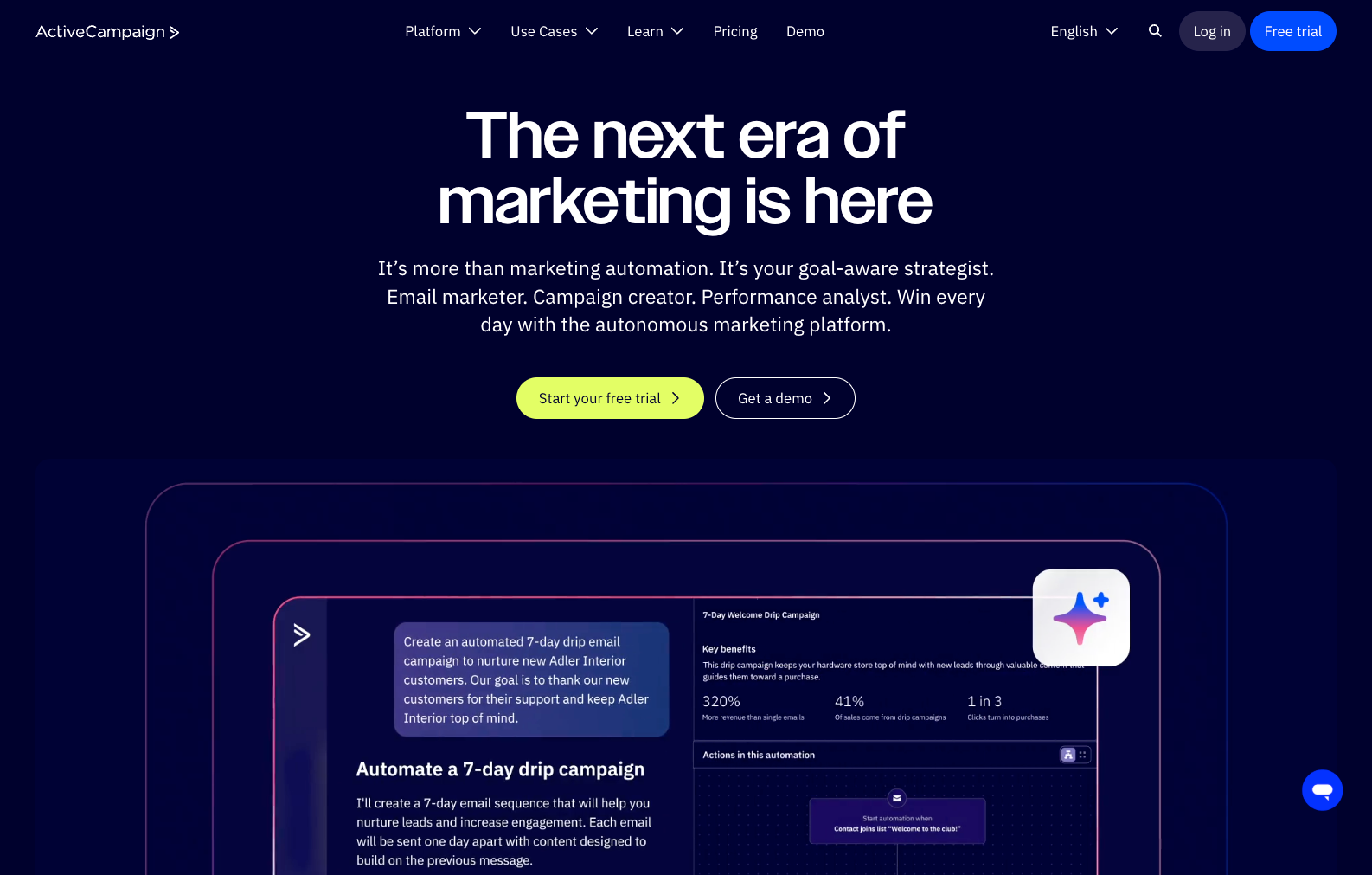
ActiveCampaign is a marketing automation and CRM platform aimed at small and mid-size businesses. It combines email marketing, sales automation, and basic CRM functionality in a single tool with a focus on ease of use.
Best for
Small and mid-size businesses that need marketing automation, email campaigns, and light CRM functionality without the complexity or cost of enterprise platforms.
Strengths
- Strong automation for the price. ActiveCampaign offers sophisticated automation workflows, including conditional branching and goal-based triggers, at a price point accessible to smaller teams.
- Built-in CRM. Contact management and sales pipeline tracking are included, reducing the need for a separate CRM for teams with simpler sales processes.
- Broad integration ecosystem. ActiveCampaign connects to hundreds of third-party tools, making it relatively easy to slot into existing marketing stacks.
Limitations
- Limited multi-channel support. ActiveCampaign focuses on email and SMS. Teams that need in-app notifications, push, or cross-channel orchestration will need to look elsewhere.
- Not developer-first. ActiveCampaign is built for marketers. Engineering teams that want API-level control over notification logic or integration into product events will find the platform limiting.
- Performance at scale. ActiveCampaign works well for smaller teams but can become less reliable and harder to manage as contact lists and automation complexity grow significantly.
Pricing
ActiveCampaign's Starter plan begins at $15 per month for up to 1,000 contacts. Pricing scales with contact count. Higher tiers unlock advanced automation, CRM features, and dedicated support.
How it compares to MailChimp
ActiveCampaign offers more automation depth than MailChimp at a similar price point, making it a natural step up for marketing teams that have hit MailChimp's automation ceiling. For teams that need product-triggered notifications or cross-functional tooling beyond email, Knock covers more ground.
Klaviyo
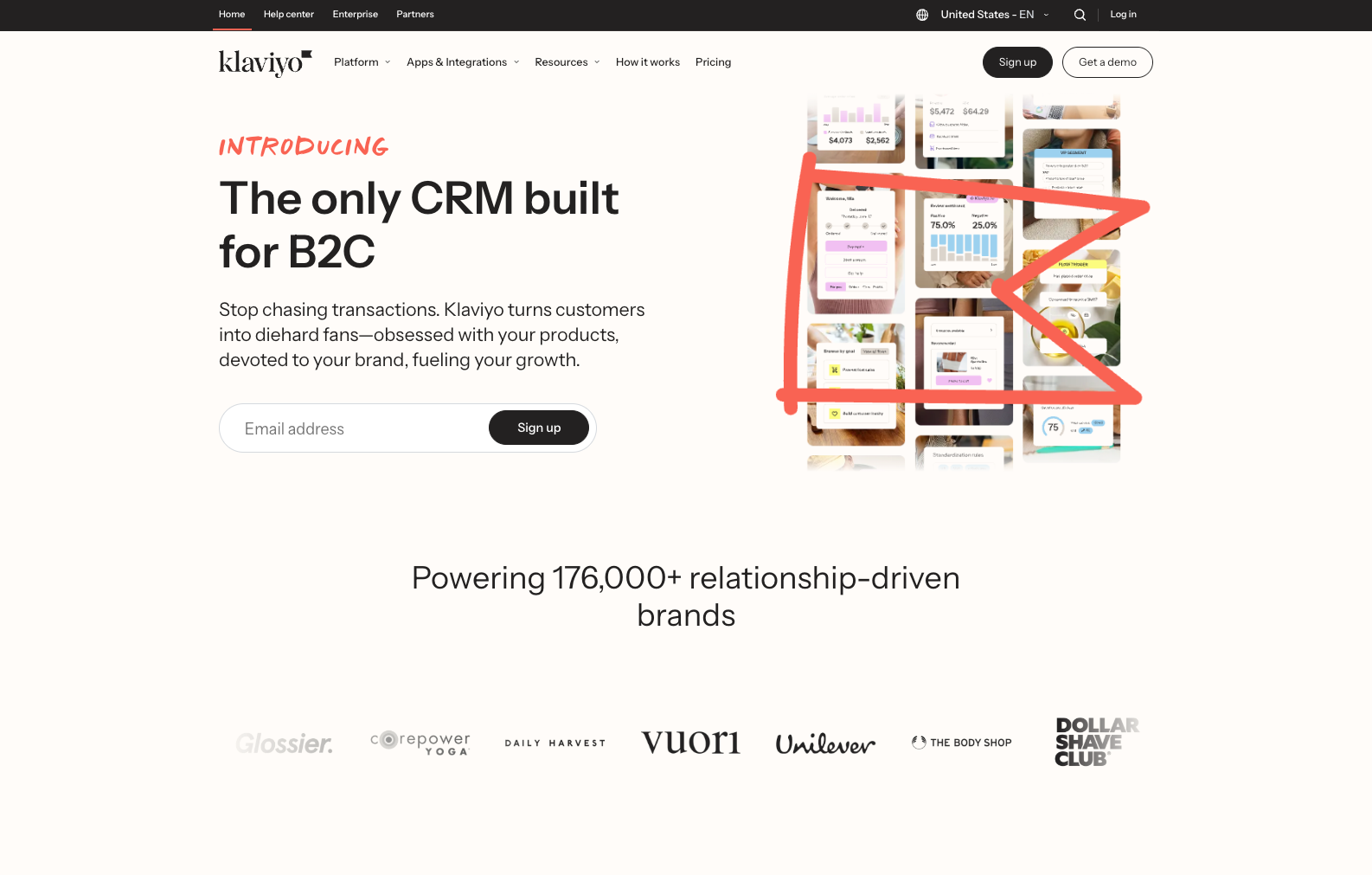
Klaviyo is a marketing automation platform built for e-commerce. It integrates deeply with Shopify and other commerce platforms to power email and SMS campaigns driven by purchase behavior and customer data.
Best for
E-commerce brands, particularly those on Shopify, that want to drive revenue through targeted email and SMS campaigns using customer purchase and browsing data.
Strengths
- Deep e-commerce integrations. Klaviyo's native integrations with Shopify, WooCommerce, and other platforms give e-commerce teams powerful data without complex setup.
- Revenue attribution. Built-in attribution reporting ties campaign performance directly to revenue, which is useful for teams optimizing for e-commerce conversion.
- Pre-built flows. Klaviyo offers ready-made automation flows for common e-commerce scenarios like abandoned cart, post-purchase, and win-back campaigns.
Limitations
- Narrowly focused on e-commerce. Klaviyo is purpose-built for retail and e-commerce. B2B SaaS, marketplaces, and product-led teams will find it a poor fit for their use cases.
- Pricing scales quickly. Klaviyo's contact-based pricing can become expensive fast, particularly as lists grow or teams run large SMS campaigns.
- Limited developer tooling. Klaviyo is a marketer-first tool. Teams that need API-first notification infrastructure or engineering-level control over messaging logic should look at more developer-oriented platforms.
Pricing
Klaviyo offers a free plan up to 250 contacts and 500 email sends. Paid plans start at $45 per month for up to 1,000 contacts (email only) or $60 per month with email and SMS.
How it compares to MailChimp
Klaviyo is more powerful than MailChimp specifically for e-commerce email and SMS. If your team runs an online store, Klaviyo is worth a close look. For B2B SaaS teams, product companies, or anyone who needs product notification infrastructure rather than commerce-driven campaigns, Klaviyo is not the right fit, and Knock or Customer.io will serve you better.
How to choose the right MailChimp alternative
The right MailChimp alternative depends on your team structure, team goals, and technical requirements. Here's a breakdown by scenario.
Small teams. Knock provides the fastest path to production for small, technical teams that need cross-channel notifications without building infrastructure from scratch. ActiveCampaign and Customer.io are solid picks to consider if your primary need is email-driven marketing automation.
Enterprise teams. For enterprise organizations where engineering, product, growth, and operations teams need to collaborate on messaging, Knock provides the technical control developers require alongside visual, low-code tooling for non-technical teams. Braze and Iterable are worth evaluating for large marketing organizations running campaigns with heavy operations involvement.
Technical teams. Knock and Customer.io both provide API-first infrastructure designed for engineering workflows. Knock can be paired with email providers like SendGrid and offers more depth for teams that need to support multiple channels, complex orchestration, or cross-functional tooling.
Non-technical teams. ActiveCampaign and, to a lesser extent, Customer.io balance marketing capabilities with ease of use for teams where engineers are not the primary operators. Both offer visual campaign builders that don't require code to manage day-to-day.
Budget-constrained. Knock and SendGrid offer predictable, usage-based pricing that scales reasonably with growth. Knock's volume-based model avoids the contact inflation that makes MailChimp and Klaviyo expensive as lists grow.
Compliance-heavy. Knock and Braze provide enterprise-grade security, SOC 2 compliance, and data residency options for teams in regulated industries. Knock's HIPAA-compliant infrastructure is a fit for healthcare-adjacent products.
MailChimp alternatives FAQs
Do these alternatives support the same channels as MailChimp?
Most of the alternatives listed here support more channels than MailChimp. MailChimp is primarily an email platform with limited SMS support. Knock, Braze, Customer.io, and Iterable all support email, push, SMS, and in-app messaging. Knock also provides native in-app notification feeds and chat integrations (e.g. Slack, Teams, and WhatsApp), which MailChimp does not support at all. SendGrid focuses on email only, while ActiveCampaign and Klaviyo cover email and SMS.
Which alternatives work well for cross-functional teams?
Knock is built for cross-functional collaboration. Engineers can manage notification logic via API and code, while product managers and marketers can edit templates and configure workflows without writing code, all within the same platform. Customer.io offers some of this balance as well, though it tilts more toward marketing-focused teams.
Which alternatives offer the most control over messaging logic?
Knock gives engineering teams the deepest control over messaging logic. Workflow conditions, digest batching, throttling, per-user preference management, and conditional channel routing are all configurable at the API level. Braze and Customer.io offer some programmatic control, but are primarily designed around visual campaign tools.
How do these alternatives compare for transactional notifications?
Knock and SendGrid are the strongest options for transactional notifications. SendGrid focuses on transactional email delivery specifically, while Knock handles transactional notifications across email, push, SMS, and in-app from a single API, including support for real-time product events, user preferences, and delivery fallback logic. MailChimp's transactional email requires a separate Mandrill integration, which adds cost and complexity.
Engage customers with Knock
If your team has outgrown MailChimp and needs a platform that gives engineers real control while keeping product and growth teams productive, Knock is worth a close look. You can get started for free, with no credit card required, and have your first notifications running in hours, not weeks.
Sign up for free or talk to the team to see how Knock fits your stack.